You Won’t Believe What Happens in Bologna After Dark
Most travelers know Bologna for its rich pasta and historic porticoes—but few discover its hidden festivals tucked away in cobbled courtyards and medieval piazzas. I stumbled upon one by chance, and it completely changed how I saw this quiet Italian city. Far from tourist crowds, locals dance, sing, and celebrate traditions passed down for centuries. These secret festivals aren’t in guidebooks, yet they’re the soul of Bologna. Let me take you where most never go.
Beyond the Tourist Trail: Bologna’s Secret Festival Culture
Bologna is often celebrated as Italy’s culinary heart, a city where tagliatelle is measured by the thread count of silk and every alley seems to lead to a trattoria with a secret sauce. Yet beneath its gastronomic fame lies a deeper rhythm—one that pulses through candlelit processions, midnight songs in ancient cloisters, and neighborhood gatherings that feel more like family reunions than public events. These are not performances for cameras or curated for Instagram. They are the quiet, enduring traditions of a city that guards its heritage with quiet pride.
What makes Bologna’s festival culture so unique is its intimacy. Unlike the grand spectacles of Venice or Rome, Bologna’s celebrations unfold in the spaces between—behind church walls, under covered porticoes, in the shadow of medieval towers. They are woven into the fabric of daily life, often announced only on hand-printed flyers taped to bakery windows or shared through word of mouth. To witness them is to be let in on a secret, not because you’ve paid for a VIP ticket, but because you’ve shown up with respect and curiosity.
The authenticity of these events is unmistakable. There are no scripted moments, no timed photo ops. Instead, you’ll find elders teaching children folk dances in piazzas, families sharing wine from the same glass, and musicians playing instruments passed down through generations. This is not tourism; it’s community. And for the traveler willing to step off the beaten path, it offers a rare kind of connection—one that lasts long after the final note of the evening’s music fades into the night.
Festa di San Luca: More Than a Religious Procession
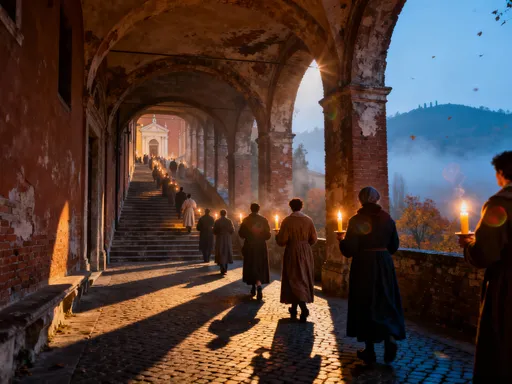
Each year, on the first Sunday of May, thousands of Bolognese make the pilgrimage to the Sanctuary of San Luca, a whitewashed church perched on a hilltop overlooking the city. The journey begins at the Porta Saragozza, where the longest portico in the world—666 arcades stretching nearly four kilometers—winds its way up the hill. By day, the path is filled with walkers, cyclists, and families. But it is at night, during the eve of the feast, that the true spirit of the Festa di San Luca comes alive.
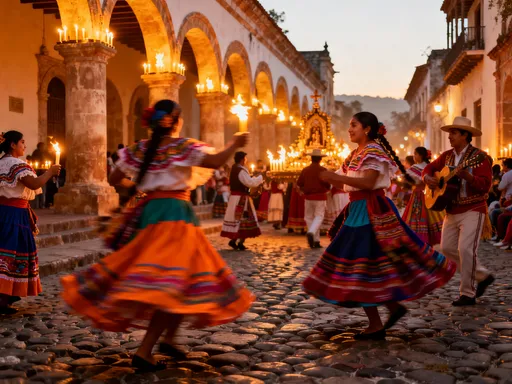
As darkness falls, the porticoes are illuminated by flickering candles held in red glass holders, casting long shadows against the ancient stone. The air fills with the scent of beeswax and the low hum of traditional hymns sung in unison. Locals walk in quiet reverence, many barefoot as an act of devotion, their footsteps echoing beneath the vaulted ceilings. This is not a reenactment; it is a living tradition, observed for over three centuries, rooted in gratitude for the city’s protection during times of plague and war.
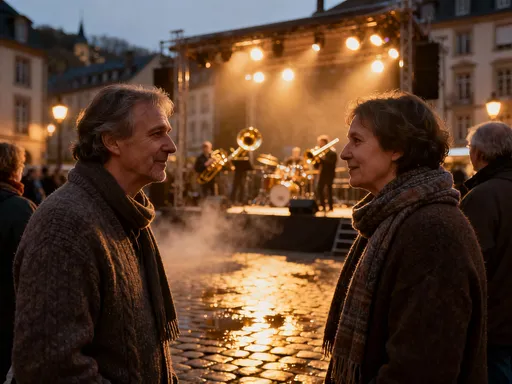
Yet the pilgrimage is only the beginning. Upon reaching the sanctuary, the mood shifts. The solemnity gives way to celebration. Music spills from hidden courtyards—accordion players, string quartets, even jazz trios—each group invited by different neighborhood committees. Food stalls appear as if by magic, serving *tigelle* with cured meats, *gnocco fritto*, and glasses of Lambrusco from local vineyards. Children chase each other between the columns, while elders sit on stone benches, sharing stories under the stars.
What makes this night extraordinary is its duality: deep spirituality intertwined with joyful community. It is a reminder that in Bologna, faith is not separate from life—it is woven into it. For visitors, the experience is humbling. There is no stage, no seating chart, no admission fee. You are simply welcome, as long as you come with an open heart and a willingness to walk quietly, to listen more than you speak, and to let the moment unfold without trying to capture it all.
Settembre Bolognese: The City’s Hidden Cultural Surge
When summer fades and the golden light of early autumn bathes Bologna’s rooftops, the city undergoes a quiet transformation. Locals return from seaside holidays, university students flood the historic center, and a wave of cultural energy sweeps through the streets. This is Settembre Bolognese—a month-long celebration of art, music, and literature that turns forgotten corners of the city into stages for intimate performances.
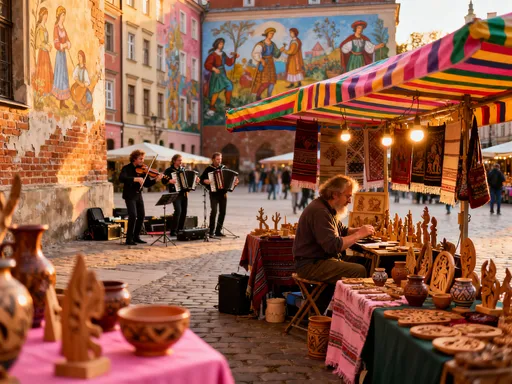
Unlike large-scale festivals with ticketed events and celebrity headliners, Settembre Bolognese thrives on spontaneity and accessibility. In the cloister of Santa Maria della Pioggia, a jazz ensemble plays beneath a 15th-century fresco of the Virgin Mary. In the courtyard of a former Dominican monastery in Santo Stefano, poets recite sonnets in dialect, their words echoing off centuries-old stone. Abandoned buildings in the Saragozza district are temporarily repurposed as galleries, showcasing works by local artists who rarely exhibit in commercial spaces.
What makes this festival season so special is its grassroots nature. Events are organized by neighborhood associations, university departments, and independent collectives, not corporate sponsors. Flyers appear on lampposts and in café windows, and many performances are free. The atmosphere is one of discovery—walking down a narrow alley, you might stumble upon a string quartet playing Vivaldi in a courtyard, or a group of children painting murals on a temporary canvas wall.
The neighborhoods of Santo Stefano and Saragozza become the heart of the action. Here, the city feels smaller, more personal. Locals gather in piazzas with glasses of wine, chatting between sets. Artists mingle with audiences, discussing their work over plates of *mortadella* and *piadina*. There is no barrier between performer and spectator—just a shared love of culture and community. For visitors, the invitation is clear: slow down, wander without a map, and let the city reveal itself one hidden moment at a time.
La Notte Rosa: When the City Glows Pink
Each July, Bologna joins a growing network of Adriatic cities in celebrating La Notte Rosa—the Pink Night—a festival that transforms the urban landscape into a canvas of soft pink light, music, and shared joy. While the event originated in nearby Rimini, Bologna has made it its own, infusing the celebration with local flavor, elegance, and a distinctly inclusive spirit.
As dusk settles, the city’s landmarks are bathed in a gentle pink glow. The Two Towers, the Basilica of San Petronio, even the porticoes of Via Maggiore—everything takes on a dreamlike hue. Streetlights are replaced with pink lanterns, and shop windows display art installations in shades of rose, coral, and blush. The color is not just decorative; it symbolizes warmth, connection, and the breaking down of barriers. It is a night when the city feels both magical and deeply welcoming.
Music fills the air from dusk until dawn. Jazz bands play in Piazza Verdi, where students and retirees sway to the same rhythm. In the Quadrilatero, small ensembles perform classical pieces in open-air courtyards. Along Strada Maggiore, DJs spin mellow house music, while folk singers gather in quieter squares, their voices rising above the murmur of conversation. Cafés extend their terraces, offering special menus and complimentary glasses of rosé wine.
What stands out most is the diversity of those who participate. Families stroll with strollers, teenagers laugh in clusters, elderly couples sit on stone benches, holding hands. There is no sense of exclusion, no VIP zones, no cover charges. The city belongs to everyone. And for a few hours, the usual divisions—age, background, status—seem to dissolve. It is not about spectacle, but about shared presence. La Notte Rosa is not just a festival; it is a reminder of what cities can be when they open their hearts to all who live in them.
Carnival of Bologna: Forgotten Masks and Medieval Games
While Venice’s Carnival draws millions with its opulent costumes and grand balls, Bologna’s version is a quiet, heartfelt affair—more about neighborhood play than public performance. Here, Carnival is not a tourist attraction but a time for families, schools, and local associations to come together in lighthearted celebration, rooted in centuries-old customs that few outsiders ever see.
In the weeks leading up to Lent, small parades form in hidden squares like Piazza Santo Stefano and Corticella. Children wear handmade masks—some whimsical, others slightly eerie—crafted in school workshops from paper, fabric, and paint. They march through the streets to the beat of tambourines and whistles, tossing confetti made from shredded colored paper. Elders watch from doorways, smiling as they remember their own childhoods.
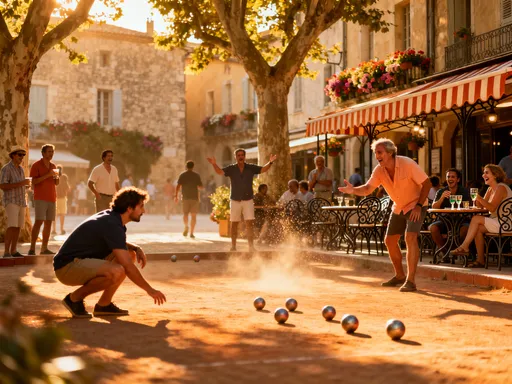
What truly sets Bologna’s Carnival apart are the traditional games. In the courtyards of old buildings, you’ll find children playing *bocce* with wooden balls, *morra* (a hand-gesture counting game), and *tiro alla fune*—tug-of-war—on cobblestone paths. These are not modern recreations; they are games passed down through generations, still played the same way they were a hundred years ago. There are no prizes, no trophies—just the joy of playing together.
Bakeries across the city fill their windows with *bugie*—crispy, golden fried pastries dusted with powdered sugar—and *ciccioli*, spiced meat snacks that reflect the city’s culinary heritage. Families gather for simple meals, sharing stories and laughter. There is no need for grandeur. The beauty lies in the ordinary, in the way a grandmother teaches her granddaughter how to fold a mask, or how a group of boys argue good-naturedly over the rules of a game.
In a world that often values scale and spectacle, Bologna’s Carnival is a quiet rebellion—a celebration of the small, the local, the handmade. It is not about being seen, but about being together. And for those lucky enough to witness it, it offers a rare glimpse into a way of life that values continuity, connection, and joy in its simplest forms.
How to Experience These Festivals Like a Local
To truly experience Bologna’s hidden festivals, timing is essential. Many events are tied to religious calendars or seasonal shifts, so planning your visit around key dates—such as the first Sunday in May for San Luca, July for La Notte Rosa, or the weeks before Lent for Carnival—can make all the difference. The city’s official tourism website and municipal notice boards often list upcoming events, but the most authentic experiences are usually shared through local networks.
One of the best ways to connect with these traditions is by joining a *sagra*—a neighborhood food fair often organized by parishes or community groups. These are not commercial events but gatherings where locals cook, share, and celebrate together. Arriving early allows you to observe the rhythm of the event, to see how people greet one another, how food is served, and how space is used. Sitting quietly with a plate of *lasagna verde* and a glass of wine can open doors faster than any question.
Technology can also help. Many Bolognese use apps like Eventbrite or local Facebook groups to stay informed about last-minute concerts, poetry readings, or pop-up exhibitions. While these platforms are in Italian, a simple translation app can help you navigate the details. The key is to be flexible—some events are announced only hours in advance, and locations may change based on weather or availability.
Equally important is etiquette. These festivals are not performances, so intrusive photography—especially of religious moments or private gatherings—should be avoided. If you wish to take a photo, ask with a smile and a nod. Dress modestly for church-related events, covering shoulders and knees when entering sacred spaces. And above all, resist the urge to treat these moments as content to be consumed. Instead, be present. Listen to the music. Taste the food. Let yourself be part of the moment, not just a witness to it.
Why These Hidden Celebrations Matter
In an age of mass tourism, where cities are often reduced to checklists of landmarks and photo ops, Bologna’s quiet festivals stand as a powerful counterpoint. They remind us that travel is not about collecting destinations, but about connecting with people, places, and traditions that have shaped a community over time. These celebrations are not designed for visitors—but when visitors come with respect, they are welcomed all the same.
What makes these events so valuable is their authenticity. They are not preserved in glass cases or staged for tourists. They are lived, evolving traditions—fragile, intimate, and deeply human. In a world that often prioritizes speed, scale, and spectacle, they offer something rare: slowness, simplicity, and sincerity. They invite us to slow down, to listen, to participate not as consumers, but as guests.
Preserving these traditions matters—not just for Bologna, but for the future of travel itself. When we choose to seek out the quiet moments, the hidden corners, the unadvertised gatherings, we move beyond surface-level tourism. We begin to understand a place not through its monuments, but through its people. We learn that culture is not something to be observed from a distance, but something to be felt, shared, and honored.
Bologna’s festivals after dark are not about grandeur. They are about belonging. They are about the warmth of a candlelit procession, the laughter of children playing ancient games, the sound of voices rising together in song. They are proof that the soul of a city does not reside in its guidebooks, but in the quiet, persistent rhythm of everyday life. So the next time you plan a trip, consider this: the most unforgettable moments are rarely the ones you read about. They are the ones you stumble upon—when you wander without a map, listen without speaking, and open your heart to the unexpected. Let Bologna show you what happens when you step off the tourist trail and into the heart of a living tradition.