Where Art Meets the Marketplace: Wrocław’s Most Creative Shopping Spots
You know that feeling when shopping doesn’t feel like shopping? In Wrocław, Poland, every market stall, gallery, and boutique blends art with everyday life in the most unexpected ways. I never expected to find hand-painted ceramics beside vintage records, or street artists turning shopping bags into mini masterpieces. This city doesn’t just sell things — it tells stories. If you’re craving a travel experience where creativity spills onto the streets and into stores, Wrocław is your next must-visit. Here, the line between artist and merchant, between gallery and marketplace, dissolves into something more meaningful: a celebration of craft, community, and cultural continuity. This is not retail therapy — it’s cultural immersion with a receipt.
The Heartbeat of Wrocław: Art in the Everyday
Wrocław pulses with a quiet kind of magic, one that reveals itself not in grand monuments but in the details — a mosaic tucked into a cobblestone alley, a painted tram stop, a hand-lettered sign in a corner café. The city’s identity is shaped by layers of history: once part of Germany, later reclaimed by Poland, rebuilt after war, and now reimagined by a generation that values authenticity over spectacle. Art here isn’t reserved for museums. It’s embedded in the urban fabric, from restored Baroque facades to contemporary installations that play with light and shadow on river-facing walls. This deep-rooted connection between place and creativity sets the stage for a shopping experience unlike any other in Central Europe.
What makes Wrocław special is how naturally art integrates with daily life. Street musicians perform near historic fountains not as buskers seeking coins, but as part of the city’s cultural rhythm. Local designers open studios in repurposed factory buildings, turning industrial decay into creative incubators. The Silesian heritage — with its traditions of weaving, pottery, and folk ornamentation — merges seamlessly with modern design sensibilities. This blend of old and new creates a visual language that feels both familiar and fresh, inviting visitors to slow down and notice. In Wrocław, beauty isn’t something to be observed from a distance — it’s something to be touched, worn, carried home.
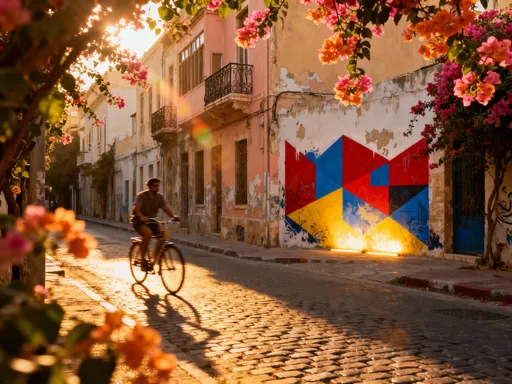
The city’s public art projects often involve community participation, reinforcing the idea that creativity belongs to everyone. Murals depicting mythical creatures, historical figures, and abstract patterns adorn building sides, transforming ordinary streets into open-air galleries. Some neighborhoods, like Fabryczna and Psie Pole, have undergone cultural revitalization led by artists and architects, turning neglected spaces into vibrant hubs. This grassroots energy makes the city feel alive, not curated. When you walk through Wrocław, you’re not just a tourist — you’re a witness to an ongoing conversation between past and present, between maker and viewer, between function and beauty.
Hala Targowa: The Market Hall That Feels Like a Gallery
At the center of Wrocław’s creative marketplace scene stands Hala Targowa, a 19th-century market hall that has been thoughtfully reimagined for the 21st century. Once a bustling hub for produce and meat vendors, today it hums with a different kind of energy — one fueled by artisanal coffee, handmade ceramics, and the quiet pride of local makers. The renovation preserved the original brick arches and iron trusses, blending industrial heritage with contemporary design. Now, instead of crates of potatoes, you’ll find wooden stalls displaying hand-bound notebooks, beeswax candles, and small-batch preserves labeled with hand-drawn typography. The space feels curated, not crowded — more like a design exhibition than a traditional market.
Visitors enter to the scent of freshly baked rye bread and simmering mushroom soup. A small café in the corner serves Polish herbal teas in hand-thrown mugs, each one slightly imperfect, each one unique. On weekends, live acoustic music drifts through the hall — a cellist, a folk duo, a solo guitarist — adding to the gallery-like atmosphere. The vendors are not faceless suppliers but individuals with stories. One woman explains how she sources wool from local sheep farms to knit her scarves; another describes the kiln-firing process behind her speckled stoneware. These personal touches transform transactions into moments of connection.
What sets Hala Targowa apart is its commitment to quality and authenticity. Unlike tourist markets filled with imported trinkets, every item here is made in Poland, often in Wrocław itself. The market managers carefully vet each vendor, ensuring that products are handmade, sustainable, and reflective of regional traditions. This curation fosters trust — shoppers know they’re not buying mass-produced souvenirs, but meaningful objects with a provenance. A ceramic bowl isn’t just dinnerware; it’s a piece of local craftsmanship, shaped by hands that care about form and function. For the mindful traveler, this is shopping with intention — a way to support local economies while bringing home something truly special.
Plac Nowy Targ: Where Street Art Becomes Commerce
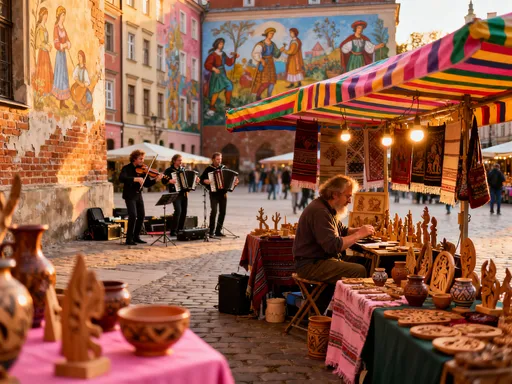
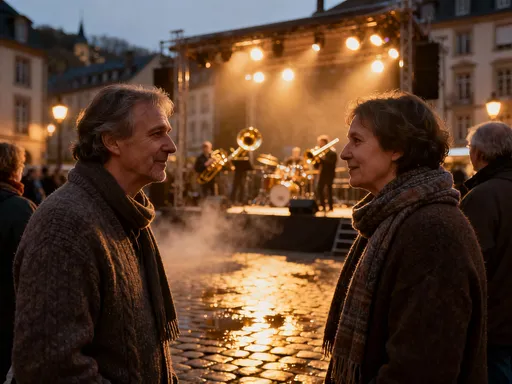
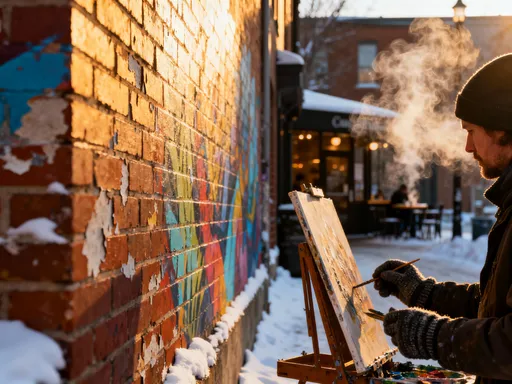
Just a short walk from the main square, Plac Nowy Targ (New Market Square) comes alive every weekend with a spontaneous explosion of creativity. Under rows of striped market tents, local artists transform the cobblestones into a living studio. This is where street art and small business intersect in the most organic way. Painters sell original watercolors of city scenes, textile artists display embroidered table runners and linen pouches, and upcycled fashion designers offer jackets refashioned from vintage military coats. The square buzzes with energy — children sketch caricatures, musicians strum guitars, and visitors sip mulled wine from paper cups as they browse.
Unlike formal galleries, Plac Nowy Targ feels democratic and accessible. Prices are modest, conversations are easy, and the atmosphere is joyful rather than transactional. Artists welcome questions, often explaining their techniques or inspirations with genuine enthusiasm. You might learn how a print was made using traditional linocut methods, or how a necklace was crafted from reclaimed copper wire. This transparency deepens the value of each purchase — it’s not just about owning an object, but about understanding the process behind it. In a world of anonymous online shopping, this human connection is rare and precious.
The square itself is a work of art. Colorful murals climb the surrounding buildings, and seasonal installations — such as light sculptures in winter or flower-covered arches in spring — enhance the sense of occasion. During the holiday season, wooden huts replace the usual tents, and the scent of cinnamon and roasted nuts fills the air. Even in summer, when the sun bounces off the cobblestones, the space feels shaded by creativity. Plac Nowy Targ isn’t just a place to shop — it’s a community event, a weekly ritual that brings together locals and visitors in shared appreciation of handmade beauty. For families, couples, and solo travelers alike, it offers a chance to slow down, engage, and rediscover the pleasure of discovery.
Design Shops on ul. Szewska: Style with a Story
If Hala Targowa and Plac Nowy Targ represent the city’s creative heartbeat, then ulica Szewska — or Szewska Street — is its stylish pulse. This narrow, cobblestone lane in the Old Town has become a destination for independent design, where every boutique feels like a carefully composed exhibition. Storefronts are unassuming, often marked only by handwritten signs or minimalist logos, but inside, the experience is anything but ordinary. This is where art school graduates, textile designers, and ceramicists open small studios that double as retail spaces, offering limited-run collections that reflect personal vision rather than seasonal trends.
One shop, Szewc, specializes in hand-stitched leather goods — wallets, journals, and belts — each one bearing the subtle imprint of the artisan’s tools. The owner, a former architecture student, explains that his designs are inspired by the geometry of Wrocław’s rooftops. Another store, Nowy Świat, focuses on wearable art: scarves printed with original illustrations, dresses cut from hand-dyed fabric, and jewelry made from recycled glass. The emphasis is on sustainability — natural materials, slow production, and timeless design. These are not items meant to be worn once and discarded, but pieces meant to age gracefully, like well-loved books or family heirlooms.
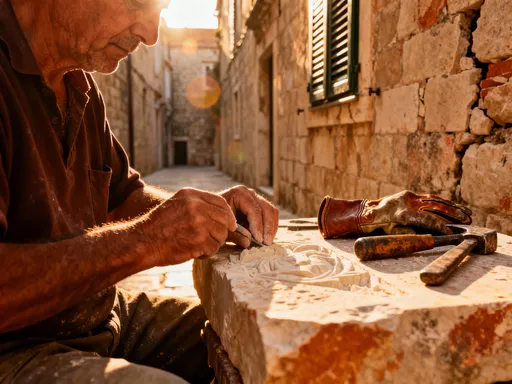
What makes shopping on Szewska so rewarding is the opportunity to meet the makers. Many shop owners work behind the counter, sanding a wooden pendant or sketching a new pattern while customers browse. They’re happy to share the stories behind their work — the inspiration for a print, the challenges of sourcing ethical materials, the joy of seeing a customer wear their creation. This personal touch transforms shopping from a routine errand into a meaningful exchange. For the traveler seeking something beyond the generic, Szewska offers authenticity in its purest form: beautiful objects made by people who care.
Galeria Awangarda: When a Mall Feels Like a Museum
In most cities, shopping malls are synonymous with uniformity — chain stores, fluorescent lighting, and the hum of escalators. Galeria Awangarda in Wrocław defies that expectation entirely. Opened in a redeveloped industrial complex, this shopping center embraces art as a core part of its identity. Instead of generic decor, its hallways and common areas host rotating exhibitions by emerging Polish artists. Sculptures made from recycled metal stand beside abstract paintings; light installations change color with the time of day; interactive displays invite visitors to contribute their own drawings or messages. The result is a space that feels more like a contemporary art museum than a retail center.
The gallery-like atmosphere extends beyond aesthetics. Galeria Awangarda partners with local art schools and cultural organizations to commission new works, ensuring that the art remains fresh and relevant. Informational plaques near each piece provide context — the artist’s name, their inspiration, and the materials used — inviting shoppers to engage rather than simply pass by. Children often stop to draw beside installations, and couples pause for photos in front of dramatic sculptures. This integration of art into daily life reflects Wrocław’s broader cultural philosophy: that beauty should not be locked behind museum doors, but woven into the routines of ordinary people.
Even the retail tenants align with this vision. While the mall includes well-known brands, it also features independent boutiques that sell handmade candles, art books, and eco-friendly cosmetics. A café in the center of the atrium serves organic pastries on ceramic plates made by local potters. The lighting is warm, the floors are polished concrete, and large windows flood the space with natural light. Unlike traditional malls designed for efficiency, Galeria Awangarda is designed for lingering — a place where you might come to buy shoes but end up spending an hour admiring a kinetic sculpture or attending a pop-up poetry reading. It proves that commercial spaces can be both functional and inspiring, serving not just wallets but imaginations.
The Artist-Maker Movement: Why Locals Create to Sell
Behind every hand-painted mug, embroidered pillow, and hand-bound journal in Wrocław is a person — often a parent, teacher, or freelancer — who chooses to make art not just for expression, but for livelihood. The city’s relatively low cost of living, compared to Warsaw or Kraków, has made it a haven for creative professionals seeking affordable studio space and a supportive community. Many artists rent small workshops in former factory buildings, sharing tools, ideas, and even childcare responsibilities. This collaborative spirit fosters innovation and resilience, allowing small-scale production to thrive in an era dominated by mass manufacturing.
For many, selling at markets or in small shops is not just about income — it’s about connection. One ceramicist, a former high school art teacher, explained that she values the feedback she receives from customers: “When someone tells me my mug feels good in their hands, it reminds me why I do this.” Another designer, who creates silk scarves printed with botanical illustrations, sells mostly at weekend markets because she enjoys the direct interaction: “I learn what people love, what they remember, what makes them smile.” These personal exchanges are a form of validation, reinforcing the emotional value of handmade work.
The artist-maker movement in Wrocław is also shaped by a desire for sustainability. Many creators use reclaimed materials, natural dyes, and low-impact production methods. A fashion designer repurposes vintage fabrics into modern silhouettes; a jeweler melts down old silverware to cast new rings. This commitment to ethical making resonates with customers who want their purchases to reflect their values. In a world where fast fashion and disposable goods dominate, Wrocław’s artisans offer an alternative — one rooted in care, intention, and respect for both people and planet. When you buy from them, you’re not just acquiring an object — you’re supporting a way of life.
How to Shop Like a Local: Practical Tips for Artful Exploration
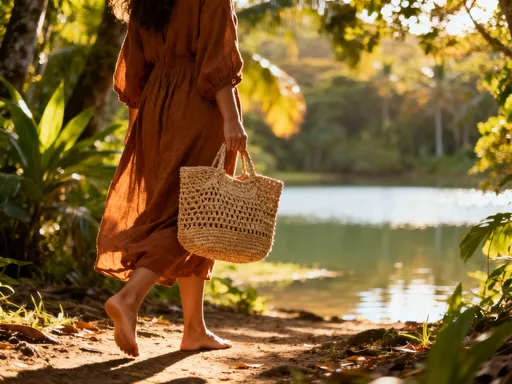
To fully experience Wrocław’s creative shopping culture, timing and approach matter. Saturdays are ideal — that’s when Plac Nowy Targ is busiest, Hala Targowa hosts live music, and small studios on Szewska Street open for weekend visitors. Arriving in the late morning allows you to enjoy the markets before the afternoon crowds. Wear comfortable shoes; the city is best explored on foot, and its cobblestone streets reward patience. Bring a reusable tote bag — not only is it practical, but it shows respect for the eco-conscious values many artisans uphold.
When shopping, look for signs of authenticity. Handmade items often have slight imperfections — an uneven stitch, a glaze variation — that distinguish them from factory-made goods. Ask questions: many vendors appreciate curiosity and are happy to explain their process. A simple “How did you make this?” or “What inspired the design?” can lead to a memorable conversation. Avoid haggling — prices at these markets are fair and reflect the time and materials invested. Instead of negotiating, consider buying an extra postcard or small item as a gesture of support.
Pair your shopping with local experiences. Stop at a family-run café near Hala Targowa for a slice of apple cake and a cup of strong Polish coffee. Take a break on a bench along the Oder River, where swans glide past colorful townhouses. Visit one of the city’s small museums, like the Museum of Architecture, to deepen your appreciation for Wrocław’s design heritage. These moments of pause enrich the journey, turning a day of shopping into a full sensory experience. And when you finally head home, your bag will carry more than souvenirs — it will carry memories of faces, stories, and the quiet joy of finding something truly one-of-a-kind.
Wrocław redefines what shopping can be — not a checklist of purchases, but a journey through color, craft, and community. In a world of generic malls and mass production, this city proves that art and commerce can coexist beautifully. When you leave with a hand-thrown mug or a sketch from a street artist, you’re not just carrying souvenirs. You’re carrying stories. And that’s the kind of travel magic worth seeking.