Taste of Siberia: Where Flavors Tell the Story of a City
Have you ever tasted a city and felt like you understood its soul? In Novosibirsk, Russia’s scientific heartbeat in Siberia, I discovered that the real magic isn’t just in its Soviet-era architecture or the mighty Ob River—it’s on the plate. From steaming pelmeni in cozy courtyards to modern twists on centuries-old recipes, the food here offers the ultimate lens into local life. This is more than dining—it’s a journey through culture, history, and unexpected warmth. Novosibirsk may not be the first name that comes to mind when travelers think of Russia, but for those willing to look beyond the tourist trail, it reveals a culinary landscape rich with stories, shaped by resilience and reinvention.
Discovering Novosibirsk: More Than Just a Transit Hub
Novosibirsk is often dismissed as a mere stopover on the Trans-Siberian Railway, a city passed through rather than explored. Yet this sprawling metropolis of over 1.6 million people is Siberia’s cultural and intellectual capital, home to one of Russia’s most prestigious academic communities and a thriving arts scene. Founded in 1893 as a railway settlement, it rapidly grew into a major urban center due to its strategic location at the crossroads of Europe and Asia. Today, it stands as a symbol of Siberian ambition—modern, dynamic, and quietly proud of its identity.
What truly distinguishes Novosibirsk, however, is not just its skyline or scientific institutes, but the way its geography shapes everyday life—including how people eat. Nestled along the banks of the Ob River, the city experiences dramatic seasonal shifts, with long, frozen winters and brief but vibrant summers. These extremes influence not only agricultural cycles but also food preservation methods and meal rhythms. The convergence of Slavic traditions, indigenous Siberian practices, and Central Asian influences creates a unique gastronomic tapestry.
Unlike the more polished offerings of Moscow or St. Petersburg, Novosibirsk’s cuisine reflects necessity and authenticity. Meals are hearty, designed to sustain energy through cold months, yet layered with subtle regional distinctions. This blend of practicality and cultural fusion makes the city an ideal entry point for understanding Siberian food culture. Travelers who take the time to explore beyond train platforms and hotel lobbies will find a city that feeds both curiosity and appetite.
The Heartbeat of Siberian Flavors: Understanding Local Food Culture
Siberian food culture is born of endurance. In a region where winter can last eight months and temperatures regularly dip below -30°C, what ends up on the table is never frivolous. Every dish serves a purpose: to warm, to nourish, to preserve. Novosibirsk, as a major urban hub in this vast territory, embodies these principles while also embracing innovation. The foundation of local cuisine lies in seasonal availability, traditional preservation, and the resourcefulness passed down through generations.
Key ingredients reflect the land’s bounty and limitations. Wild mushrooms—such as boletus and chanterelles—are foraged in late summer and autumn, then dried or pickled for winter use. River fish like omul and taimen, native to Siberia’s pristine waters, appear in soups, smoked preparations, and savory pies. Dark rye bread, dense and tangy, remains a daily staple, often baked in communal ovens or purchased from neighborhood bakeries that open before dawn.
Preservation techniques are central to the culinary rhythm. Smoking, salting, fermenting, and pickling allow families to store food for months. Sauerkraut, for instance, is not merely a side dish but a vital source of vitamins during long winters. Smetana, a thick sour cream, acts as both a condiment and preservative, enriching everything from soups to desserts. These methods aren’t relics—they’re still actively used in homes and small eateries, linking modern diners to ancestral ways of living.
What emerges is a cuisine defined by depth and warmth. Dishes are rarely delicate; they are robust, layered, and meant to be shared. The flavors tell a story of survival, adaptation, and quiet pride. To eat in Novosibirsk is to participate in a tradition shaped by climate, history, and community—a tradition that values substance over spectacle.
From Street Stalls to Hidden Kitchens: Where Locals Eat
To understand Novosibirsk’s food scene, one must step away from tourist-facing restaurants and into the spaces where locals gather. These are not always marked by bright signs or online reviews. Instead, they reveal themselves through queues at lunchtime, the scent of baking dough drifting from unassuming doorways, or the sound of laughter from a courtyard café tucked behind a Soviet-era apartment block.
One of the best places to start is the Central Market, a bustling complex where vendors sell everything from freshly smoked fish to jars of homemade preserves. Here, elderly women in woolen scarves offer samples of pickled mushrooms, while butchers display cuts of beef and pork sourced from nearby farms. The market isn’t just a place to shop—it’s a social hub, where neighbors catch up and recipes are exchanged. For visitors, it’s an invitation to observe, engage, and taste with curiosity.
Equally revealing are the city’s stolovayas, Soviet-style canteens that continue to serve affordable, home-cooked meals. These no-frills dining rooms often lack menus; instead, dishes are displayed behind glass counters, allowing customers to point and choose. A typical plate might include buckwheat porridge, stewed cabbage, and a portion of meat cutlet, all for a few dollars. While some stolovayas operate in office basements or residential buildings, others have been revitalized with modern touches while keeping their core mission: feeding people well and efficiently.
Then there are the family-run eateries, often hidden in courtyards or side streets, where grandmothers oversee the kitchen and sons take orders. These spots rarely advertise, relying instead on word-of-mouth and repeat customers. Ordering might require basic Russian or simple gestures, but the experience is worth the effort. It’s here that travelers encounter food at its most authentic—not staged for cameras, but prepared with care for those who appreciate it.
Pelmeni, Pirozhki, and Borscht: Dishes That Define the City
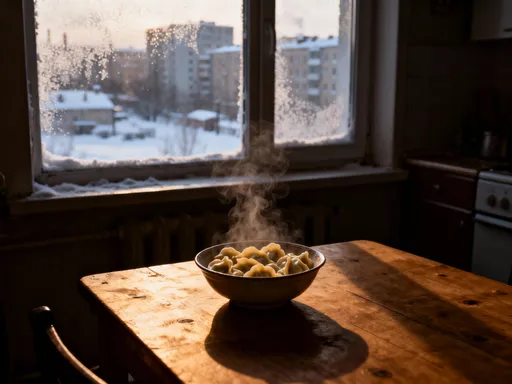
No exploration of Novosibirsk’s cuisine is complete without encountering its iconic dishes. At the top of the list is pelmeni, the Siberian dumpling that has become a national favorite. Unlike versions found elsewhere, Siberian pelmeni are small, tightly wrapped, and packed with a rich mixture of beef, pork, and sometimes lamb. They are traditionally boiled in broth and served with smetana, fresh onions, and a splash of vinegar or horseradish. The result is a warming, savory bite that feels like comfort made tangible.
Another staple is pirozhki, baked or fried buns filled with cabbage, potatoes, meat, or even fruit. Found at markets, bakeries, and street carts, they make for a quick breakfast or afternoon snack. Their golden crusts crackle under the teeth, giving way to a steaming interior that varies with the season and region. In Novosibirsk, pirozhki often carry a slight sweetness in the dough, a subtle nod to local tastes.
Then there is borscht, the beloved beet soup that appears in countless variations across Eastern Europe. The Novosibirsk version is deeply savory, often enriched with beef broth, shredded cabbage, carrots, and tomatoes. Served hot with a dollop of smetana and a slice of rye bread, it is both nourishing and deeply satisfying. Some restaurants now offer chilled summer versions, but the winter iteration remains the favorite—thick, aromatic, and capable of warming the entire body.
Other dishes, like Olivier salad—a mayonnaise-based mix of potatoes, eggs, pickles, and bologna—are fixtures at holiday tables and casual gatherings alike. Though often dismissed as simple, these dishes carry emotional weight, evoking memories of family dinners and festive celebrations. Modern chefs in Novosibirsk are beginning to reinterpret these classics, using organic ingredients, artistic plating, and global techniques. Yet even in upscale settings, the essence remains: food that connects, comforts, and endures.
A Culinary Walk Through the City: Mapping the Must-Try Spots
For travelers eager to taste Novosibirsk firsthand, a walking tour through the city center offers a perfect introduction. Begin at Lenin Square, the symbolic heart of the city, where the imposing statue of Lenin stands beneath a colonnade. Nearby, the GUM department store houses a food hall featuring regional specialties, from smoked fish to jars of wild berry jam. It’s an ideal place to pick up edible souvenirs or enjoy a quick bite.
Just a ten-minute walk away lies the Novosibirsk Opera and Ballet Theatre, one of the largest in Russia. The surrounding area is dotted with cafés and restaurants catering to both performers and audiences. One standout is a small dumpling house known for its handmade pelmeni and vareniki (dumplings filled with cottage cheese or berries). The menu is simple, the decor modest, but the quality is consistently high. Arriving early is advisable—locals know this spot well, and tables fill quickly.
Heading toward the Railway Station, visitors will find a cluster of bakeries and snack bars offering pirozhki, blini (thin pancakes), and kvas (a fermented grain drink). While the station itself is a transit point, the adjacent streets pulse with culinary energy. A popular stall near Platform 1 serves freshly baked bread with lard and garlic—a humble but beloved combination among commuters.
For a more modern experience, the Ribatsky Market has undergone recent renovations, blending traditional vendor stalls with clean, well-lit spaces. Here, one can sample river fish, try Siberian honey, or sip on herbal teas made from local plants. Several food counters offer ready-to-eat meals, making it easy to assemble a picnic-style lunch. The market also hosts seasonal events, such as mushroom festivals in autumn, where foragers and chefs come together to celebrate regional ingredients.
This walkable route—linking landmarks with local flavors—allows visitors to experience Novosibirsk at a human pace. It’s not about ticking off attractions, but about pausing, tasting, and absorbing the rhythm of daily life.
Beyond the Plate: How Food Connects People and History
In Novosibirsk, food is never just about sustenance. It is a thread that weaves through personal memories, family traditions, and collective history. Meals are shared events, often stretching over hours, where stories are told, laughter echoes, and connections deepen. Whether gathered around a kitchen table or seated in a crowded canteen, people eat together—not out of habit, but out of necessity and affection.
Many dishes carry historical echoes. Pelmeni, for instance, trace their origins to the indigenous peoples of Siberia, who developed the dumpling as a way to preserve meat during long journeys. Russian settlers adopted and adapted the recipe, turning it into a household staple. Similarly, Olivier salad emerged during the Soviet era, when ingredient scarcity led to creative combinations. Today, it is served during New Year’s celebrations, linking present-day families to the past through taste.
Food also plays a role in seasonal rituals. During Maslenitsa, the week-long festival marking the end of winter, blini are prepared in abundance, symbolizing the sun and renewal. Families gather to eat, sing, and bid farewell to the cold months. Even in modern, secular households, these traditions persist, often centered around the kitchen and the shared labor of cooking.
For many Novosibirsk residents, especially older generations, food is a form of resistance—a way to maintain identity amid political and economic change. During the Soviet period, home kitchens became spaces of autonomy, where women preserved recipes and flavors that official rationing could not standardize. Today, grandmothers still teach grandchildren how to roll pelmeni or ferment cabbage, ensuring that knowledge survives.
In this way, every meal becomes an act of remembrance. To eat in Novosibirsk is to participate in a living archive, where flavor carries meaning and every bite tells a story.
How to Eat Like a True Novosibirsk Local: Tips and Takeaways
For visitors hoping to immerse themselves in Novosibirsk’s food culture, a few practical tips can make all the difference. First, adjust your expectations: dining here is not always fast or flashy. Meals unfold slowly, especially on weekends or holidays, when families prioritize time together over efficiency. Rushing through a meal may be seen as disrespectful—so slow down, savor each course, and embrace the pause.
When it comes to menus, many local eateries offer limited English translation. Learning a few key words—such as pelmeni, borshch, pirozhki, and smetana—can go a long way. Pointing at what others are eating is also a perfectly acceptable strategy. Don’t hesitate to ask for recommendations; staff are often happy to guide curious diners.
Timing matters. Lunch is typically the main meal of the day, served between 1:00 and 3:00 PM. Breakfast is light—often tea with bread or a pastry—while dinner may be simpler, especially on weekdays. Arriving at a restaurant outside peak hours might mean fewer options, so plan accordingly.
Tipping is appreciated but not mandatory. Leaving 5–10% in cash is common in sit-down restaurants, while street vendors and market stalls do not expect extra. The focus is on fairness, not extravagance.
Seasonality plays a big role in what’s available. Summer brings fresh berries, herbs, and vegetables, while winter highlights preserved foods, root vegetables, and hearty meats. If visiting in autumn, look for wild mushroom dishes; in spring, seek out nettle soup or early greens. Eating with the seasons is not just a trend here—it’s a way of life.
Finally, approach food with humility and openness. Novosibirsk’s cuisine may not always match international expectations of elegance, but it offers something deeper: authenticity, warmth, and a genuine connection to place. By eating like a local—choosing small eateries, engaging with vendors, and embracing unfamiliar flavors—travelers gain more than a meal. They gain insight.
The True Taste of Siberia
Novosibirsk is not a city that reveals itself easily. Its grand buildings stand quietly, its streets move with steady purpose, and its people carry themselves with a reserved dignity. But sit down to a meal—whether in a bustling market, a family kitchen, or a corner café—and the city begins to speak. Through the steam rising from a bowl of borscht, the crunch of a freshly baked pirozhok, the communal act of folding pelmeni by hand, Novosibirsk shares its essence.
This is a cuisine forged by necessity, refined by tradition, and kept alive by everyday acts of care. It reflects the resilience of a region shaped by extremes, yet it also reveals a profound hospitality—one that welcomes strangers to the table without fanfare. To taste Novosibirsk is to understand that food is more than fuel. It is memory, identity, and connection.
For travelers willing to look beyond stereotypes of Siberia as a frozen frontier, the city offers a revelation: warmth exists, even in the coldest places. It is found in shared meals, in generations-old recipes, in the simple act of breaking bread together. Novosibirsk does not serve spectacle. It offers something far more valuable: truth on a plate. And in that truth, there is beauty, strength, and the quiet joy of being fed—not just in body, but in spirit.