Lost in the Soul of Naples: Where Every Corner Tells a Story
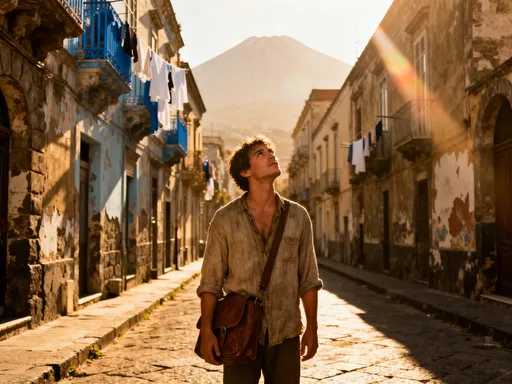
Walking through Naples feels like flipping through the pages of a living novel—chaotic, passionate, and deeply authentic. The city doesn’t just show you its landmarks; it lets you feel them. From the hum of espresso machines in tiny cafes to the sudden view of Mount Vesuvius over a maze of laundry-lined streets, Naples grabs your attention and never lets go. This is not just sightseeing—it’s a full sensory immersion. Every alley echoes with history, every gesture carries meaning, and every meal tells a story. For travelers seeking depth, emotion, and truth in their journeys, Naples offers a rare gift: the chance to connect not only with a place but with the soul of everyday life.
First Impressions: Stepping Into Naples’ Raw Energy
Arriving in Naples for the first time can be an assault on the senses—in the best possible way. The central train station, Napoli Centrale, pulses with movement: travelers weaving through crowds, vendors calling out, suitcases rattling across worn marble floors. Outside, the city erupts in sound—scooters zipping past with a sharp buzz, car horns blaring in rapid conversation, voices rising and falling in animated Italian. The air carries a mix of diesel, fresh bread, and the faint briny scent of the nearby Tyrrhenian Sea. It’s loud, it’s fast, and it’s alive.
Many visitors, especially those accustomed to quieter European capitals, may feel overwhelmed at first. But this energy is not disorder—it’s rhythm. Naples operates on a different tempo, one shaped by centuries of layered cultures, resilience, and deep-rooted community. The key to embracing the city is to stop resisting the flow and instead allow yourself to drift with it. Let the noise become background music. Let the motion become part of the experience. This isn’t a place to rush through; it’s a place to settle into.
For first-time travelers, a few practical steps can ease the transition. Upon arrival, consider taking a taxi or regional metro line rather than navigating chaotic street traffic on foot. Avoid carrying large luggage through narrow alleys, where sidewalks often vanish without warning. Keep valuables secure—pickpocketing can occur in crowded areas, particularly around transit hubs. And most importantly, wear comfortable shoes. The city is built on hills, and you’ll walk far more than you expect, often without realizing it.
One of the most helpful mindsets is to release the need for control. In Naples, plans change, shops close without notice, and directions are often given with hand gestures rather than street names. That’s not inefficiency—it’s humanity. When a local points down an alley and says, “Just follow the smell of frying olives,” they’re not being vague. They’re inviting you into a different way of knowing. Embrace the unpredictability. Let the city surprise you. That’s where the real magic begins.
Historic Heart: Exploring Spaccanapoli and Ancient Streets
At the core of Naples lies Spaccanapoli, a remarkably straight street that cuts through the historic center like a seam through fabric. Its name, meaning “Naples splitter,” reflects its role as the central spine of the old city, dividing it into eastern and western halves. Walking along this ancient thoroughfare is like moving through a timeline of civilizations. Every building, every doorway, every fragment of stone carries a whisper from the past. This is not a museum—it’s a living archive.
The origins of Spaccanapoli trace back to the Greek colonization of southern Italy in the 8th century BCE. The street follows the original Roman grid system, laid out when Naples was known as Neapolis, “the new city.” Beneath your feet, archaeologists have uncovered layers of Greco-Roman ruins—ancient aqueducts, cisterns, and even entire villas preserved in the city’s underground network. Some of these can be visited through guided tours of Napoli Sotterranea, a vast subterranean world that reveals how past generations lived, worked, and survived beneath the surface.
Along Spaccanapoli, the architectural styles shift seamlessly. One moment you’re passing a modest bakery tucked into a 14th-century archway, the next you’re standing before the ornate façade of the Church of San Gregorio Armeno, famed for its Nativity scene artisans. The street is lined with quiet courtyards hidden behind iron gates, some accessible only if you ask politely or catch a resident opening the door. These inner spaces—known as cortili—were once communal living areas for extended families and still function as shared gardens, laundry spots, and children’s play zones in many neighborhoods.
Wandering off Spaccanapoli reveals even more intimate stories. Side alleys branch into dimly lit passages where laundry hangs like colorful banners between buildings. Small shrines to the Virgin Mary appear in unexpected corners, adorned with candles and fresh flowers. The scent of garlic and tomatoes drifts from open windows where families prepare Sunday lunch. There are no grand signs announcing these moments—they are simply part of daily life. Yet they are precisely what make Naples unforgettable.
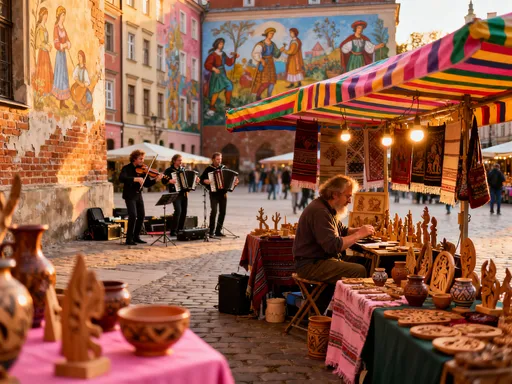
For travelers, the best approach is to leave the map behind and allow curiosity to guide you. Stop to admire a hand-painted tile, listen to a street musician playing accordion near a fountain, or accept an invitation to peek inside a family-run ceramics shop. These unplanned interactions are the soul of the city. And remember: many of the most beautiful sites aren’t listed in guidebooks. They’re found in the quiet pause between footsteps, in the glance exchanged with a local grandmother sitting on her balcony, in the taste of a warm sfogliatella bought from a vendor who remembers your face by the third day.
Views That Stick: Capturing the Bay and Beyond
Naples is a city of dramatic perspectives. One moment you’re deep in a narrow alley, surrounded by centuries-old stone, and the next you turn a corner and the entire Bay of Naples unfolds before you—blue, shimmering, framed by the ever-present silhouette of Mount Vesuvius. These sudden revelations are not accidental. They are part of the city’s poetic design, where nature and urban life exist in constant dialogue.
Among the most powerful vantage points is the hilltop sanctuary of Sant’Anna dei Lombardi, located in the quieter Vomero district. From its terrace, the city stretches out like a living tapestry—red rooftops, winding streets, the glint of the sea. Early morning is the ideal time to visit, when the light is soft and the air still carries a hint of coolness. Photographers will appreciate the long shadows and gentle contrast, while contemplative travelers may find a sense of calm in the quiet gardens surrounding the church.
Another unforgettable viewpoint lies along the Posillipo promenade, a scenic path that hugs the coastline to the west of the city center. Here, the sea crashes against rocky cliffs below, and luxury villas nestle into the hillside. The path is popular with locals for evening strolls, especially at sunset, when the sky turns gold and pink and couples sit on stone benches to watch the light fade over Capri in the distance. It’s a romantic scene, not in an artificial way, but in the way that real life sometimes offers moments of quiet beauty.
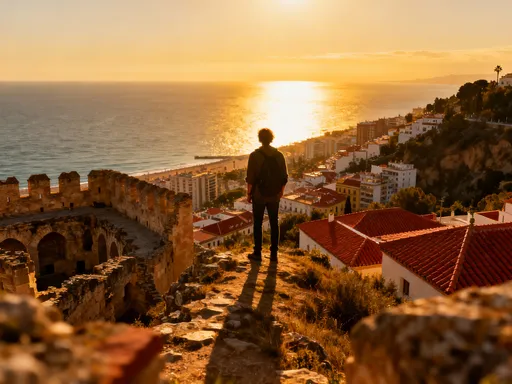
For a more intimate experience, visit the Castel dell’Ovo, a seaside fortress located on the former island of Megaride. The castle itself dates back to the 12th century, though its foundations are even older, possibly Greek. A walk along its ramparts provides panoramic views of the waterfront and the sweeping curve of the bay. On clear days, the islands of Ischia and Procida are visible in the distance, their green hills rising from the water like ancient sentinels.
What makes these views so powerful is not just their beauty, but their emotional weight. Standing above the city, you gain more than a visual perspective—you gain understanding. You see how Naples clings to the edge of the sea, how it has grown upward and inward over centuries, how it endures despite earthquakes, eruptions, and time. The view becomes a metaphor: life is not about perfection, but about persistence. And Naples, in all its layered complexity, is a testament to that truth.
Street Life as Art: The Human Landscape of Naples
If the streets of Naples are a stage, then its people are the performers—and they play their roles with natural grace. This is not theater for tourists; it is life, unfiltered and unscripted. An old man in a wool cap argues passionately over a game of cards in a piazza. A woman in a floral apron tosses pasta in a sizzling pan, her movements precise from decades of practice. Children chase each other through an open square, their laughter echoing off stone walls. These moments are not curated—they are real, and they are everywhere.
The markets of Naples are especially rich with human texture. At Mercato di Porta Nolana or Mercato di Pignasecca, vendors call out their daily specials—fresh anchovies, ripe tomatoes, bundles of wild fennel. Stalls overflow with color: pyramids of citrus fruit, wheels of mozzarella di bufala, baskets of olives soaked in herbs. The air is thick with the smell of frying fish, garlic, and damp pavement. Shoppers haggle gently, not out of necessity, but as a form of social ritual. A purchase is not just a transaction; it’s a conversation, a connection.
Neighborhoods in Naples are tightly knit, and daily routines unfold in public view. In the morning, families gather outside schools, chatting while children adjust their backpacks. At midday, workers spill into small cafes for a quick espresso and a cornetto. In the late afternoon, grandmothers take their seats on folding chairs outside their doors, watching the world go by. These rhythms are not rushed. They are deliberate, rooted in tradition, and deeply comforting.
For the observant traveler, these scenes offer more than visual interest—they offer insight. You begin to understand that in Naples, life is not lived behind closed doors. It is lived on the street, in the piazza, at the family table. Relationships matter more than efficiency. Presence matters more than productivity. A 20-minute chat with a neighbor is not a waste of time—it’s the fabric of community.
This is perhaps the greatest lesson Naples offers: that beauty exists not in perfection, but in authenticity. The chipped paint on a doorframe, the frayed edge of a tablecloth, the raised voice in a friendly argument—these are not flaws. They are signs of life well lived. And when you learn to see them not as imperfections but as expressions of character, your entire experience of the city deepens.
Architectural Layers: Where Styles Collide and Connect
Naples does not follow a single architectural style—it celebrates them all. Walk through the historic center, and you’ll pass Gothic arches, Renaissance courtyards, Spanish Baroque façades, and Neoclassical porticos—all within a few blocks. This is not architectural confusion; it is historical harmony. Each layer represents a different era of rule, invasion, and cultural exchange, from Greek and Roman times through Norman, French, Spanish, and Bourbon influences.
The city’s skyline is a patchwork of domes, bell towers, and weathered stone. The Royal Palace of Naples, facing Piazza del Plebiscito, stands as a monument to 17th-century grandeur, with its symmetrical façade and sweeping staircase. Nearby, the Church of San Francesco di Paola echoes the Pantheon in Rome, yet feels distinctly Neapolitan in its warmth and ornamentation. These buildings were not built in isolation—they were shaped by the people who lived around them, adapted over time to meet changing needs.
One of the most striking examples of Naples’ architectural fusion is the Church of Santa Chiara. Originally built in the 14th century in Gothic style, it was largely destroyed during World War II bombings and later rebuilt with respect to its original design. Today, it houses a serene cloister adorned with vibrant majolica tiles in floral patterns, a 18th-century addition that transforms the space into something both sacred and joyful. The contrast between the solemn church interior and the colorful courtyard reflects the city’s ability to blend sorrow and celebration, destruction and renewal.
What makes Naples’ architecture so compelling is its honesty. Buildings are not restored to pristine perfection; they are preserved with their scars visible. Cracks in the stone, mismatched repairs, faded frescoes—these are not hidden. They are part of the story. This approach reflects a deeper cultural value: that age is not something to be erased, but honored. A building, like a person, gains character through experience.
For travelers, this means that every walk is an education. You don’t need to be an art historian to appreciate the details. Simply look up. Notice the carved faces above doorways, the iron balconies twisted into floral shapes, the shutters painted in faded blues and greens. These elements were not designed for tourists—they were made for daily life. And in their imperfection, they speak volumes about the people who created them and the city that raised them.
Beyond the Center: Coastal Escapes and Hillside Retreats
While the historic core of Naples is magnetic, the city offers peaceful contrasts just a short distance away. These nearby escapes provide breathing room, fresh air, and new perspectives—literally and figuratively. They allow travelers to recharge without leaving the city limits, offering a balance between immersion and reflection.
The Vomero district, perched on a hill above the center, is one of the most refreshing retreats. Reached by funicular or a steady walk uphill, Vomero is quieter, greener, and cooler—both in temperature and atmosphere. The views from Piazza Vanvitelli are among the best in the city, stretching from the bay to Vesuvius. The area is popular with local families and professionals, and its tree-lined streets are dotted with bakeries, bookshops, and small parks. The Certosa di San Martino, a former monastery turned museum, sits at the edge of the hill, offering not only panoramic vistas but also an intimate look at Neapolitan art, history, and religious life.
Another serene destination is the Villa Comunale, a public park along the waterfront. Once a royal garden, it is now a favorite spot for locals to stroll, jog, or sit by the sea. The park features shaded pathways, fountains, and small kiosks selling gelato and drinks. On weekends, children ride colorful pedal-powered cars along the promenade, and couples walk hand in hand by the water. The atmosphere is gentle, unhurried—a welcome contrast to the intensity of the old town.
For those seeking a brief coastal escape, the area around Castel dell’Ovo and the Mergellina neighborhood offers a scenic walk along the sea. The path connects several small beaches and fishing spots, where wooden boats bob in the waves and fishermen mend their nets. Restaurants line the shore, serving simple seafood dishes—grilled octopus, fried squid, spaghetti with clams—prepared with ingredients caught that morning. Dining here is not about luxury; it’s about freshness, tradition, and the pleasure of eating with a view.
These areas remind travelers that Naples is not just a city of chaos and history—it is also a city of balance. It knows when to shout and when to whisper. It honors its past while embracing moments of stillness. And by exploring these quieter corners, visitors gain a more complete picture of what Naples truly is: a place of depth, rhythm, and surprising tenderness.
How to See Naples Like a Local: Mindset Over Map
The most rewarding way to experience Naples has little to do with sightseeing lists or timed tours. It begins with a shift in mindset—from observer to participant, from visitor to temporary resident. Locals don’t rush through their city; they live in it. They know when to pause, when to listen, when to linger over a coffee for an hour. They understand that the heart of Naples is not in its monuments, but in its moments.
One of the simplest yet most powerful practices is to slow down. Sit at a café not to check off a box, but to watch. Order a single espresso and let it last 30 minutes. Notice how people greet each other—often with a kiss on both cheeks, always with warmth. Listen to the rhythm of conversations, the rise and fall of voices, the laughter that erupts without warning. These sounds are part of the city’s music.
Another habit is to eat like a Neapolitan. Breakfast is quick: a pastry and coffee at the bar. Lunch is the main meal, often shared with family. Dinner starts late, sometimes after 8:00 PM, and unfolds over multiple courses. When you dine, choose family-run trattorias over tourist-heavy restaurants. Ask for the daily special. Let the server guide you. And never refuse a taste of homemade wine offered with a smile.
Perhaps most importantly, be open to connection. Smile at a shopkeeper. Compliment a woman’s flowers on her balcony. Say “buongiorno” when entering a small store. These small gestures are valued. They signal respect, curiosity, and kindness. And more often than not, they are returned with warmth, advice, or even an unexpected invitation.
In the end, Naples teaches a quiet but profound lesson: that authenticity is not something you find—it’s something you practice. It’s in the way you move through the world, the attention you give, the patience you hold. The city doesn’t demand perfection. It asks only for presence. And if you give it that, Naples will give you something rare: a memory that doesn’t fade, a feeling that stays, a story you’ll carry long after you’ve left its streets behind.