Canals, Gables, and Hidden Gems: Amsterdam’s Architectural Soul Uncovered
You know that feeling when a city just gets you? Amsterdam did exactly that—its skyline of leaning gables, narrow houses, and golden-light windows felt like stepping into a living painting. I came for the canals, but stayed for the architecture. From 17th-century merchant homes to bold modern designs, every corner tells a story. This isn’t just sightseeing—it’s soul-stirring. Let me take you through the city’s most unforgettable structures, the hidden details most miss, and why its architectural heartbeat is impossible to ignore.
First Impressions: The City That Defies Gravity
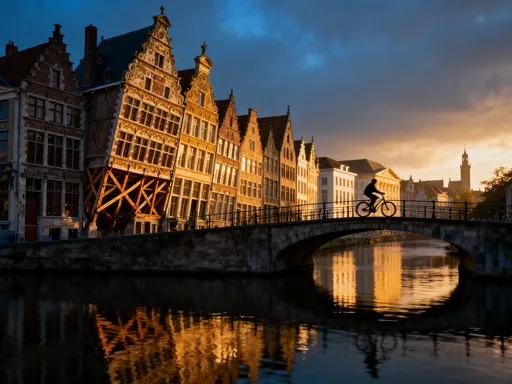
Arriving in Amsterdam, one cannot help but notice how the city seems to lean into itself—houses tilting at angles that defy logic, yet somehow standing firm after centuries. These crooked facades, especially along the tree-lined canals of the Grachtengordel, create a dreamlike skyline that feels both delicate and enduring. The phenomenon of leaning buildings is not a sign of decay but a testament to Amsterdam’s unique foundation: wooden piles driven deep into soft, waterlogged soil. During the 17th century, builders used thousands of wooden posts—often alder or oak—sunk up to 20 meters below ground to support the weight of homes and warehouses. Over time, shifts in water levels and soil compression have caused some structures to settle unevenly, resulting in the charming, off-kilter profiles that now define the city’s character.
Despite their tilt, these buildings are remarkably stable. The soft soil acts as a natural cushion, absorbing movement and preventing structural collapse. This ingenious adaptation to challenging geography is a hallmark of Dutch engineering. Most canal houses were constructed with narrow facades—often no wider than 6 to 8 meters—due to high property taxes based on street frontage. To compensate for limited width, homes were built vertically, sometimes reaching six or seven stories. Wooden beams across the rooftops, known as hoisting beams, were used to lift heavy goods directly into upper-floor storage spaces, a necessity for merchants who lived and worked in the same building. This blend of practicality and elegance introduced a new architectural language, one rooted in function yet rich with ornamentation.
Dutch Classicism, the dominant style during the Golden Age, emphasized symmetry, proportion, and restrained decoration. Facades featured sandstone or limestone embellishments around windows and doors, while gables rose like sculpted crowns above the streets. The combination of narrow proportions, vertical emphasis, and decorative gables gave Amsterdam its distinctive rhythm—a cityscape that feels both intimate and grand. For first-time visitors, walking along the Singel or Herengracht in the early morning light, when reflections ripple in the still water, is like moving through a carefully composed engraving. It’s an introduction not just to beauty, but to resilience: a city built on water, shaped by trade, and sustained by innovation.
The Golden Age Legacy: Walking Through 17th-Century Grandeur
Amsterdam’s architectural golden age coincided with its rise as a dominant force in global trade during the 17th century. As the Dutch East India Company expanded its reach across Asia, Africa, and the Americas, the city became a hub of wealth, culture, and ambition. This prosperity was etched into the urban fabric through the construction of elegant canal houses along the newly developed Grachtengordel—the Canal Ring. Commissioned as part of a massive urban expansion project, these waterways were not merely decorative but served vital functions in transportation, drainage, and defense. The homes built along them reflected the status and aspirations of their owners: wealthy merchants, regents, and ship captains who wanted to display their success through architecture.
The most prestigious addresses were found along Herengracht and Keizersgracht, where wider plots allowed for more elaborate designs. These homes featured ornate gables, intricate stone carvings, and finely crafted wooden doors. Wealthy families often hired prominent architects to design their residences, incorporating classical motifs such as pilasters, pediments, and cartouches. The use of imported materials—like marble from Italy and sandstone from Germany—further emphasized the global reach of Amsterdam’s elite. Inside, the vertical layout was both practical and symbolic: the ground floor served as a showroom for goods, the middle floors housed family living spaces, and the upper levels were used for storage, often accessible only by narrow spiral staircases.
One of the most iconic examples is the Museum Van Loon on Keizersgracht, a former residence of a noble banking family. Restored to reflect 19th-century interiors, it offers a glimpse into the domestic life of Amsterdam’s upper class. The house features a grand staircase, period furnishings, and a private garden—rare in such a dense urban setting. Another notable site is the Anne Frank House on Prinsengracht, a more modest canal house that gained historical significance during World War II. While not opulent, its preservation reminds visitors of the human stories embedded in these structures. The Golden Age may have passed, but its architectural legacy remains alive, preserved not in museums alone but in the everyday streetscape of modern Amsterdam.
Gable by Gable: Decoding Amsterdam’s Architectural Language
Among the most expressive elements of Amsterdam’s architecture are its gables—the decorative tops of buildings that rise above the rooftops like signatures. Each gable tells a story, not only of aesthetic preference but of regional identity, craftsmanship, and social standing. Three primary styles dominate: the step gable, the neck gable, and the bell gable. The step gable, with its tiered, staircase-like silhouette, is the most iconic and widely recognized. Originating in the Netherlands and northern Germany, it was popular during the early 17th century and often featured pinnacles and finials that added vertical emphasis. The neck gable, narrower and more restrained, resembles a classical column with a capital and base, reflecting the influence of Italian Renaissance architecture. The bell gable, curvaceous and fluid, evokes a sense of movement and was particularly favored in the later decades of the Golden Age.
Beyond their visual appeal, gables served functional purposes. Their shapes helped shed rainwater and snow, while the overhanging designs protected wooden beams from moisture damage. In a city where fire was a constant threat, stone and brick gables also offered a degree of fire resistance. More importantly, gables were status symbols. The more elaborate the design, the greater the owner’s wealth and influence. Families often commissioned custom carvings, including mascarons—stone faces placed above doors or windows—believed to ward off evil spirits or represent ancestral figures. Some mascarons are whimsical, others solemn, but all add a human touch to the façade.
Equally revealing are the inscriptions and emblems etched into stone or wood. Family crests, Latin mottos, and dates of construction provide clues about the original inhabitants. On Herengracht, for example, a house built in 1662 bears the initials “J.V.H.” and the phrase “Godt alleene myn hoope,” meaning “God alone my hope”—a reflection of both personal faith and public identity. These details, often overlooked by hurried tourists, invite closer inspection. They transform a simple walk into a journey through time, where every building becomes a document of its era. For those who take the time to look, Amsterdam’s gables speak volumes—not in words, but in stone, brick, and memory.
Beyond the Canals: Modern Marvels in a Historic City
While Amsterdam’s historic core captivates with its 17th-century elegance, the city’s architectural spirit continues to evolve. Contemporary buildings demonstrate how innovation and tradition can coexist, often in striking contrast. One of the most celebrated examples is the EYE Filmmuseum, located across the IJ River in Amsterdam Noord. Its bold, white angular form appears to float above the water, its sweeping curves and glass façade catching the sunlight like a cinematic screen. Designed by Delugan Meissl Associated Architects, the building houses film exhibitions, screening rooms, and a vast archive, serving as both a cultural institution and a sculptural landmark. Its location, accessible by free ferry from Central Station, makes it a popular destination for locals and tourists alike.
Another standout is the NEMO Science Museum, designed by Italian architect Renzo Piano. Shaped like a green, sloping ship, the building invites visitors to climb onto its roof for panoramic views of the city. Its interior is dedicated to interactive learning, with hands-on exhibits that engage children and adults in scientific exploration. The design reflects a commitment to accessibility and sustainability, using natural light and energy-efficient systems. Similarly, the new De Bijbels Museum (The Biblical Museum), while rooted in historical storytelling, occupies a modern space that integrates multimedia installations and contemporary design to bring ancient texts to life.
What unites these modern structures is a respect for context and function. Rather than imitating the past, they respond to current needs—education, culture, environmental responsibility—while contributing to the city’s visual diversity. Amsterdam has strict preservation laws, especially in the canal belt, but encourages creative solutions in newer districts. Adaptive reuse is common: old factories, warehouses, and schools are transformed into offices, apartments, and cultural centers. The Hoftuin in Oud-West, for instance, is a repurposed school building now housing sustainable businesses and community spaces. These projects reflect a broader philosophy: that architecture should serve people, adapt to change, and honor both history and progress.
Off-the-Beaten-Path Beauty: Lesser-Known Architectural Treasures
Beyond the well-trodden paths of the Canal Ring lies a different Amsterdam—one shaped by social reform, industrial growth, and artistic experimentation. Neighborhoods like Oud-West and Amsterdam Noord reveal architectural layers often missed by visitors focused on the city center. In the early 20th century, as Amsterdam expanded to accommodate a growing population, the Amsterdam School movement emerged, advocating for humane, expressive urban design. Characterized by expressive brickwork, curved lines, and artistic ironwork, this style rejected the austerity of industrial architecture in favor of warmth and individuality.
In Oud-West, streets like Bilderdijkstraat and Van Hallstraat showcase this aesthetic. Buildings feature undulating facades, ornate stair railings, and whimsical details such as star-shaped vents and sculpted animals. Designed by architects like Michel de Klerk and Piet Kramer, these homes were intended for working-class families but treated with the same care as grand merchant houses. The use of colored brick, arched windows, and decorative chimneys transformed utilitarian housing into art. Today, these neighborhoods are vibrant and diverse, with independent cafes, boutiques, and community gardens nestled within historic blocks.
Equally compelling are the hidden courtyards known as hofjes—small, tranquil spaces tucked behind unassuming doors. Originally established by charitable organizations in the 17th and 18th centuries, hofjes provided housing for elderly women and widows. Many still exist, maintained as quiet oases in the urban fabric. The Begijnhof, one of the oldest, dates back to the 14th century and features timber-framed houses surrounding a central garden. Though located near Spui Square, it remains surprisingly secluded, offering a rare sense of stillness. Other hofjes, such as Zonnestraal or Walen courtyard, have been repurposed as artist studios or cultural venues, preserving their communal spirit in new forms. These spaces remind us that Amsterdam’s architectural soul is not only in grand facades but in the quiet corners where community and care take shape.
The Art of Urban Planning: How Canals Shaped a City
The Amsterdam Canal Ring is more than a picturesque waterway—it is a masterpiece of urban planning and engineering. Constructed primarily between 1613 and 1660, this concentric network of canals was designed to manage the city’s rapid growth while addressing practical challenges of flooding, transportation, and sanitation. The three main canals—Herengracht, Keizersgracht, and Prinsengracht—form graceful arcs that radiate outward from the medieval city center. Intersected by radial streets and smaller cross-canals, the layout creates a highly organized grid that remains functional today. In 2010, UNESCO recognized the Canal Ring as a World Heritage Site, praising its innovative integration of water and urban life.
The original design was driven by necessity. Amsterdam sits below sea level, making flood control a constant concern. The canals functioned as a sophisticated drainage system, channeling excess water toward the IJ River and ultimately the North Sea. Locks and sluices regulated water levels, while windmills—later replaced by pumping stations—helped move water uphill. For transportation, the canals served as highways, allowing goods to be delivered directly to warehouses via boat. This efficiency fueled the city’s economic boom, as ships from around the world docked at the port and distributed cargo through the waterways.
Today, the city continues to innovate in water management. With rising sea levels and increased rainfall due to climate change, Amsterdam has implemented smart engineering solutions. The Benthemplein Water Square, for example, is a multifunctional public space that doubles as a water reservoir during heavy rains. Designed to capture and store runoff, it prevents street flooding while serving as a basketball court, amphitheater, and sunken garden in dry weather. Similarly, new housing developments incorporate floating foundations and green roofs to enhance resilience. These modern adaptations echo the ingenuity of the past, proving that Amsterdam’s relationship with water is not a vulnerability but a source of strength and creativity.
Traveler’s Guide: How to Experience Amsterdam’s Architecture Like a Local
To truly appreciate Amsterdam’s architectural depth, timing and approach matter. The best light for photography and sightseeing occurs in the early morning or late afternoon, especially during spring and autumn when the sun casts long golden reflections on the canals. Summer brings crowds, so visiting popular areas like the Nine Streets or Museumplein before 10 a.m. allows for a more peaceful experience. For a deeper understanding, consider joining a guided walking tour focused on architecture—organizations like the Amsterdam Heritage Foundation offer expert-led excursions that reveal hidden details and historical context.
Self-guided walks can be equally rewarding. Begin at Central Station and follow the Singel canal southward, then loop through Herengracht and Keizersgracht, noting the evolution of gable styles and façade decorations. Cross the Magere Brug (Skinny Bridge) for a classic view of the illuminated canals at dusk. For a modern contrast, take the free ferry to Amsterdam Noord and explore the EYE Filmmuseum and A'DAM Tower, where the rooftop swing offers a thrilling perspective of the skyline. In Oud-West, stroll along Kinkerstraat and visit Westergas, a repurposed gasworks site now housing restaurants, theaters, and markets.
When photographing, be respectful of residents—many canal houses are private homes. Avoid using flash at night and never trespass into courtyards without permission. For indoor insights, visit the Amsterdam Museum near Dam Square, which traces the city’s development from a fishing village to a global metropolis. The Het Schip Museum, dedicated to the Amsterdam School movement, is located in a former housing complex and offers a vivid look at early 20th-century social architecture.
Getting around is easy thanks to Amsterdam’s excellent public transport. Trams, buses, and ferries connect all major districts, while cycling remains one of the most enjoyable ways to explore. Rent a bike and follow designated routes along the canals, but remember to lock it securely and follow traffic rules. If traveling with children, prioritize family-friendly stops like NEMO or the Hortus Botanicus. Finally, pack for variable weather—raincoats and comfortable shoes are essential. With thoughtful planning, every visit becomes more than a trip; it becomes a conversation with a city that has mastered the art of living on water.
Amsterdam’s architecture is more than old bricks and charming facades—it’s a living dialogue between past and present. Each building, whether centuries-old or freshly built, reflects resilience, creativity, and a deep respect for design. By slowing down and looking closely, travelers don’t just see a city—they connect with its soul. This is what makes Amsterdam not just a place to visit, but a place to feel.