Wandering Through Flavors: Arusha’s Hidden Food Soul
You know what? Arusha isn’t just a gateway to Tanzania’s epic landscapes—it’s a feast waiting to be discovered. I wandered its streets not with a map, but with my appetite, and what I found blew my mind. From smoky grilled meats at bustling markets to sweet, spiced chai in quiet corners, every bite told a story. This is real, raw, delicious Tanzania. More than a transit point for safaris and mountain treks, Arusha pulses with culinary life, where food is not simply eaten but experienced—deeply, communally, joyfully. In this city of red dust and green hills, flavor is the language of connection, and every meal is an invitation to belong.
First Bites: Arrival in Arusha and the First Taste of Local Life
Stepping off the plane at Kilimanjaro International Airport, the first thing that greets you is not a sign or a taxi queue, but a scent—charred maize roasting over open coals, sweet and earthy, drifting through the warm morning air. Just beyond the terminal, vendors balance baskets of roasted corn on their heads, calling out to travelers with wide smiles. This is where your Arushan food journey truly begins: not in a restaurant, but on the roadside, with buttery kernels pulled straight from the cob. It’s humble, yes, but also deeply nourishing—a welcome as warm as the equatorial sun.
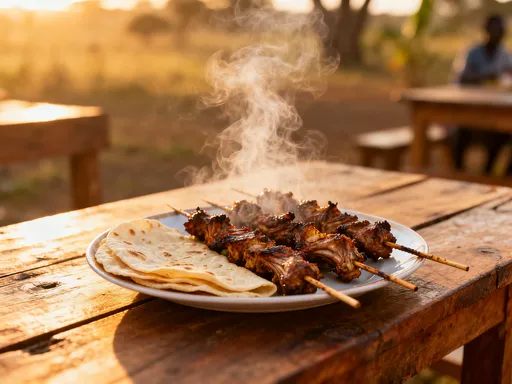
By the time you reach downtown Arusha, the city’s rhythm becomes audible—the sizzle of grills, the clatter of metal plates, the laughter between neighbors sharing breakfast. Street food here is not a novelty; it’s the backbone of daily nourishment. A small paper cone of mishkaki, skewered goat meat marinated in ginger, garlic, and coconut oil, costs less than a dollar but delivers a flavor explosion that lasts all morning. Vendors work with practiced ease, turning skewers over glowing charcoal, their hands moving as if guided by generations of instinct. These are not meals to rush through but to savor slowly, standing beside a wooden cart as motorbikes buzz past and the day unfolds.
Starting your exploration with these everyday eats sets the tone for authenticity. There’s no pretense, no curated menu—just food made for Tanzanians, by Tanzanians. It’s an immediate immersion into local life, where hunger is met not with extravagance but with generosity. By choosing to begin here, you signal openness, respect, and curiosity—qualities that will open more doors than any guidebook ever could. The city rewards those who eat like its people do, one bite at a time.
The Pulse of the Plate: Understanding Tanzanian Cuisine Through Arusha’s Kitchens
To understand Arusha’s food soul, you must first understand its staples: ugali, nyama choma, and sukuma wiki. These are not just dishes—they are pillars of Tanzanian life, eaten daily across homes, street stalls, and family gatherings. Ugali, a dense maize porridge, is the foundation of most meals. It’s cooked in a wide pot over a low flame, stirred constantly with a wooden paddle until it reaches a dough-like consistency. Served in a mound on a plate, it’s meant to be torn by hand and used to scoop up stews and greens. It’s simple, filling, and deeply satisfying—a testament to resourcefulness and tradition.
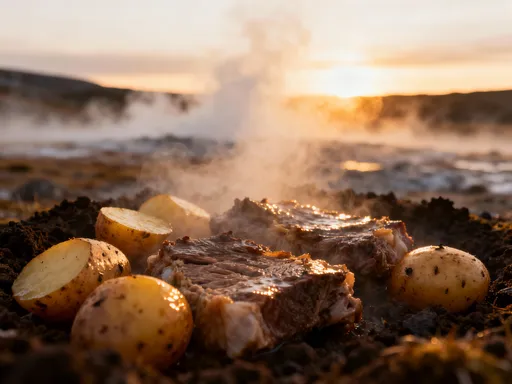
Nyama choma, or grilled meat, is the centerpiece of celebration. Usually goat or beef, the meat is cut into chunks, marinated lightly, and slow-roasted over charcoal until the edges are crisp and smoky. It’s often served with a side of pili pili sauce—a fiery blend of chili, lemon, and oil—that adds a bold kick. In Arusha, you’ll find nyama choma grills on nearly every corner, their smoke rising like incense into the evening sky. Families gather around shared platters, tearing meat with their fingers, passing plates, and laughing over cold sodas or locally brewed beer.
Then there’s sukuma wiki, a sautéed green leafy vegetable—often kale or collard greens—cooked with onions, tomatoes, and a touch of oil. Its name literally means “stretch the week,” a nod to its role in making meals last when resources are tight. Yet far from being a sign of scarcity, it’s a beloved flavor, its earthy tang balancing the richness of grilled meat. These three elements—ugali, nyama choma, sukuma wiki—form the holy trinity of Tanzanian cuisine, a reflection of an agrarian society where food is grown, shared, and honored.
Arusha, nestled in the fertile northern highlands, is a microcosm of this national food culture. Its markets overflow with fresh produce, its kitchens echo with the sounds of simmering pots and crackling fires. But more than that, the city embodies the communal spirit of East African dining—where meals are not solitary acts but shared experiences, where strangers become friends over a common plate. To eat here is to participate in a tradition older than borders, rooted in land, labor, and love.
Off the Map: Chasing Street Food in Local Neighborhoods
If you want to taste the real Arusha, step away from the tourist hotels and head into the residential neighborhoods—Majengo, Sekei, Kaloleni—where life unfolds at street level. Here, food isn’t served on white tablecloths but on banana leaves or paper wrappings, passed hand to hand with a smile. These are the places where locals eat, where the rhythm of daily life is set by meal times, and where the most authentic flavors thrive.
One early evening, I followed the scent of sizzling fat down a narrow alley in Kaloleni and found a cluster of women tending small grills outside their homes. One offered chapati, a flatbread of Indian origin that has become a Tanzanian staple. She rolled the dough by hand, slapped it onto a hot greased pan, and flipped it with a flick of her wrist. Within minutes, it puffed into golden layers, crisp on the outside, soft within. Served with a side of lentil curry or a fried egg, it’s comfort food at its finest—warm, filling, and deeply personal.
Nearby, a man stood beside a cart piled high with ripe mangoes, papayas, and passion fruit. With a few swift cuts, he transformed a mango into a frothy pink smoothie, blended with a splash of milk and ice. No fancy machinery—just a hand-cranked blender and muscle. I sipped it slowly, the sweetness balancing the day’s heat, while children played nearby and neighbors called out greetings. This is the beauty of Arusha’s street food culture: it’s not just about taste, but about presence. You’re not a spectator; you’re part of the scene.
For the adventurous, there are dishes that might challenge the uninitiated—tripe stews, fried intestines, or blood sausages grilled over open flames. These are not for shock value but for sustenance and tradition, born from a culture that wastes nothing and honors every part of the animal. Approaching them with respect—not disgust—is key. A simple “Nataka kujaribu” (“I’d like to try”) spoken in Swahili often earns a grin and a patient explanation. These moments of connection, born from curiosity and humility, are among the most rewarding of any journey.
Markets as Feasting Grounds: Arusha Central Market Uncovered
No visit to Arusha is complete without a walk through the Arusha Central Market, a sprawling maze of stalls that hums with life from dawn to dusk. More than a place to buy goods, it’s a living food theater, where ingredients are not packaged but pulsing with freshness. The air is thick with the scent of crushed cloves, cumin, and coriander—spices piled in colorful mounds that look like miniature desert dunes. Vendors call out prices, barter with customers, and occasionally pause to share a joke or a cup of chai.
Walk through the fruit section, and you’ll see pyramids of plantains, pineapples, and avocados so ripe they yield to the slightest touch. Women slice open jackfruit with machetes, revealing golden bulbs that taste like a cross between banana and pineapple. In the fish aisle, tilapia and Nile perch glisten on beds of ice, recently brought down from Lake Manyara or Lake Victoria. Nearby, butchers display goat and beef cuts with pride, while smoked fish hangs in long rows, their surfaces darkened by wood smoke and time.
But the true magic happens in the cooking corners—small open-air kitchens where women prepare meals on charcoal stoves for hungry shoppers and workers. One vendor stirs a pot of mchicha, a spinach-like green cooked with ground peanuts, creating a rich, nutty stew. Another fries samosas, their golden crusts flaking at the touch, filled with spiced potatoes and peas. For a few hundred shillings, you can sit on a low stool and eat as the city swirls around you. There’s no menu, no waiter—just food made with care and served with warmth.
The market also reveals seasonal rhythms. During mango season, carts overflow with the fruit in every variety—yellow, green, red—each with its own sweetness. In the rainy months, wild mushrooms appear, foraged from the slopes of Mount Meru and sold in paper bags. These patterns reflect a deep connection to the land, a way of eating that follows nature’s calendar rather than supermarket supply chains. To shop here is to eat with the earth, not against it.
Coffee & Culture: Sipping Tanzania’s Finest in Arusha’s Cafés
After the intensity of street food and market feasting, Arusha offers moments of pause in its growing café scene. These are not chains or copycats, but independent spaces that celebrate Tanzania’s world-class coffee while embracing modern comfort. In the heart of the city, tucked between boutiques and bookshops, you’ll find cozy cafés where baristas pour single-origin Arabica with pride, explaining the notes of citrus, chocolate, or berry that come from the volcanic soils of the surrounding highlands.
Tanzania ranks among Africa’s top coffee producers, and Arusha sits at the center of it all. The slopes of Mount Meru and the Ngorongoro highlands provide ideal conditions—altitude, rainfall, rich soil—creating beans of exceptional clarity and depth. Local cooperatives, many run by smallholder farmers, have gained international recognition for their quality. In Arusha’s cafés, you’re not just drinking coffee; you’re tasting terroir, tradition, and transformation.
One afternoon, I settled into a sunlit corner at a café near the Clock Tower, where a young woman in a handmade apron handed me a pour-over brewed from Kilimanjaro-grown beans. The aroma was bright, almost floral. The first sip revealed a clean acidity, followed by a smooth sweetness. As I sat there, journal in hand, I watched locals meet for quiet conversations, students study over laptops, and travelers plan their next moves. This is the new face of Arusha—respectful of heritage but open to evolution.
Many of these cafés also serve light bites—fresh banana bread, honey-drizzled yogurt, or avocado toast made with local ingredients. Some host open mic nights or art displays, turning coffee breaks into cultural exchanges. They are spaces of calm in a bustling city, where time slows just enough to breathe, reflect, and connect. In a world that often moves too fast, these moments of stillness are a gift.
Dining with a View: From Rooftop Eateries to Garden Restaurants
For those seeking a touch more comfort without sacrificing authenticity, Arusha offers a growing number of mid-range and boutique dining experiences. These are not five-star resorts but thoughtfully designed spaces that honor local flavors while providing a relaxed, scenic setting. Rooftop restaurants, in particular, have become favorites—places where you can dine under a canopy of stars, with the city lights twinkling below and the silhouette of Mount Meru rising in the distance.
One such spot, nestled in the suburbs, features an open-air kitchen where chefs cook over wood-fired grills. The menu blends tradition with subtle innovation—ugali made with purple maize, nyama choma served with tamarind glaze, sukuma wiki sautéed with garlic and chili. The atmosphere is warm, the service unhurried. Families gather for Sunday lunch, couples share bottles of Tanzanian wine, and solo travelers find seats at communal tables. Here, food is still the focus, but so is the experience—the breeze, the music, the sense of being somewhere special.
Garden restaurants offer another dimension—lush, green oases where meals unfold beneath banana trees and flowering hibiscus. One evening, I dined at a farm-to-table venue on the city’s edge, where the vegetables were harvested that morning and the chicken came from free-range coops nearby. A fire pit crackled in the center, and live Swahili music played softly in the background. The chef, a young woman trained in both local and international cuisine, explained each dish with pride, emphasizing sustainability and seasonality.
These spaces represent a new chapter in Arusha’s food story—one that respects roots while embracing change. They are not replacements for street food or home cooking but complements, offering different ways to engage with the same flavors. Whether you’re celebrating a birthday or simply treating yourself after a long day of exploration, these venues remind you that pleasure and tradition can coexist.
Beyond the Meal: How Food Shapes Connection and Memory
Of all the souvenirs I’ve collected in Arusha, the most lasting are not objects but moments—shared meals that opened doors to deeper understanding. One afternoon, I was invited into a home in Sekei after helping a woman carry groceries. Her family welcomed me without hesitation, setting an extra plate at the table. We ate ugali and bean stew with our hands, laughing as I struggled to roll the dough properly. The children taught me Swahili phrases between bites, and the grandmother smiled as she passed me a second helping.
Another evening, a street vendor offered me a recipe for his spice mix after noticing my interest. He wrote it on a scrap of paper in Swahili, then translated it slowly, word by word. That small act of trust—sharing knowledge, not just food—stayed with me. I’ve since recreated the blend at home, and each time I use it, I’m transported back to that dusty corner, the sizzle of the grill, the warmth of human kindness.
These experiences underscore a simple truth: food is a bridge. It transcends language, culture, and background. In Arusha, where life moves at a human pace, meals are not rushed but cherished. They are moments of pause, of presence, of connection. To eat with someone here is to be accepted, even briefly, as part of their world. And in that exchange, both giver and receiver are enriched.
For the traveler, this is the deepest form of cultural immersion—not observing from a distance, but participating with heart. It’s in the shared laughter over spilled chai, the patient teaching of a cooking technique, the silent understanding between strangers who eat from the same plate. These are the memories that last long after the journey ends.
Conclusion: Why Arusha’s Culinary Journey Stays With You
Arusha is often seen as a stopover—a place to rest before the Serengeti or to prepare for Kilimanjaro. But to view it only as a transit point is to miss its soul. This city, with its red soil and vibrant markets, its smoky grills and quiet cafés, offers a culinary journey as rich and rewarding as any safari. Here, food is not an afterthought but the main event—a living expression of culture, community, and resilience.
The flavors of Arusha linger not because they are exotic, but because they are honest. They speak of land and labor, of family and tradition, of generosity and joy. To explore them is to travel slowly, mindfully, with all your senses awake. It is to move beyond sightseeing and into belonging—even if only for a meal.
So when you come to Arusha, don’t just pass through. Stay awhile. Follow the scent of roasting meat. Try the mango smoothie from the street cart. Sit in the market and eat where the locals eat. Let a stranger teach you a recipe. Sip coffee grown on volcanic slopes. Let your palate lead you, not your itinerary.
Because the true soul of a city is not in its monuments or maps, but in its meals. And in Arusha, that soul is warm, welcoming, and served with love on a simple plate.